Why Forcing Turnout in Adult Ballet Class Is a Bigger Injury Risk Than You Think
Quick Answer: Turnout comes primarily from hip joint rotation, which is largely determined by bone structure and can’t be forced past your natural range without compensating at the knee or ankle — a common source of injury in adult beginners eager to look ‘more turned out.’ Real turnout improvement comes from hip mobility work, not forcing the feet wider.
It’s tempting to twist your feet into a wider V at the barre because it looks more like ‘real ballet.’ But that extra angle usually isn’t coming from your hips — it’s coming from your knees and ankles, and that’s where the injury risk lives.
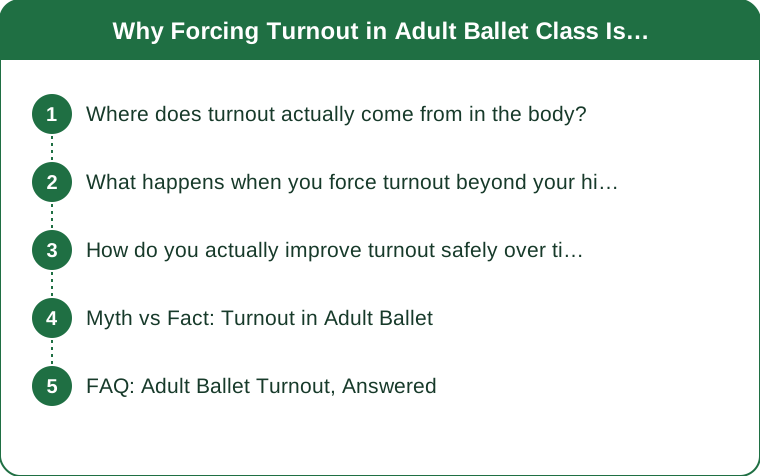
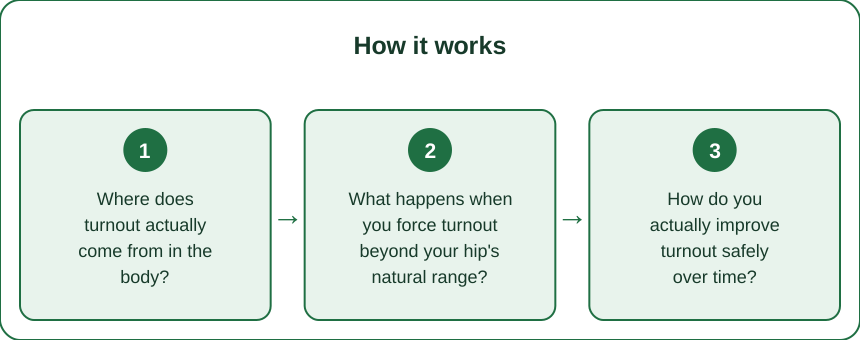
Where does turnout actually come from in the body?
Turnout is primarily external rotation at the hip joint, and the available range varies significantly between individuals based on hip socket depth and femur shape — factors you can’t train your way past. Some adults have a naturally deep turnout range; most have a moderate one, and that’s a structural reality, not a fitness level.
What you can train is how much of your available hip rotation you’re actually using, since many beginners access only a fraction of their true range due to weak external rotator muscles, not tight ones.
What happens when you force turnout beyond your hip’s natural range?
When the feet are pushed wider than the hips can support, the extra rotation gets pulled from the knees and ankles instead — joints that aren’t built for that kind of rotational load. This is one of the most common causes of knee pain in adult ballet students, and it often shows up as a nagging, hard-to-pinpoint ache rather than a sudden injury.
The visual cue is a foot position that looks wider than the knee is actually tracking — if your kneecap isn’t pointing the same direction as your toes in a turned-out plié, the extra rotation is coming from somewhere it shouldn’t.

How do you actually improve turnout safely over time?
Strengthening the deep hip external rotators (glute medius and the six deep rotator muscles) is what expands usable turnout, not stretching harder or forcing the feet wider in class. Targeted exercises like seated hip rotations, clamshells, and controlled retiré work build the strength to actually hold a wider position without compensating elsewhere.
This is a slow process — meaningful, safe turnout improvement typically takes months of consistent supplemental work, not a single class of trying harder.
Myth vs Fact: Turnout in Adult Ballet
Myth: Turnout is mostly about foot position. Fact: Foot position is the visible result, but turnout originates in the hip. Focusing on the feet alone is exactly what leads to forcing and injury.
Myth: With enough stretching, anyone can achieve a full 180-degree turnout. Fact: Bone structure sets a hard ceiling on turnout range for most adults — flexibility work helps you reach your available range, but it doesn’t change your skeletal anatomy.
FAQ: Adult Ballet Turnout, Answered
How do I know if my turnout is being forced instead of coming from my hips?
Check your knee alignment in a turned-out plié — if your knee doesn’t track over your toes, some of that rotation is likely coming from your ankle or knee instead of your hip.
Is it normal for turnout to feel different on each side?
Yes, asymmetry between sides is common and usually structural, not something you’re doing wrong — working each side to its own comfortable range is safer than forcing symmetry.
Should beginners even worry about turnout in their first few months?
Not much — building general strength, alignment awareness, and hip mobility matters far more early on than chasing a wider turnout position before the supporting muscles are ready.
TL;DR:
- Turnout comes from hip rotation, which is largely determined by bone structure
- Forcing beyond your hip’s range pulls rotation from the knees and ankles, risking injury
- Strengthening deep hip rotators — not stretching harder — is what safely expands turnout
- Knee-to-toe alignment in plié is the clearest sign of forced versus genuine turnout
A turnout that looks slightly smaller but comes honestly from the hips will always be safer than a wider one borrowed from the knees.
Keep Reading
This article is for general informational and styling purposes only. Fit, sizing, and product availability may vary.