Why Your Ballet Turnout Feels Different From Class to Class
Quick Answer: Turnout range shifts day to day mainly from hip joint warmth, sleep quality, and how much sitting you did earlier that day — all of which affect hip capsule mobility independent of your actual flexibility training progress.
You had a great turnout Tuesday. Thursday, in the same studio with the same warm-up, it feels stuck an inch short — and it’s tempting to read that as backsliding when it’s usually just daily variability.

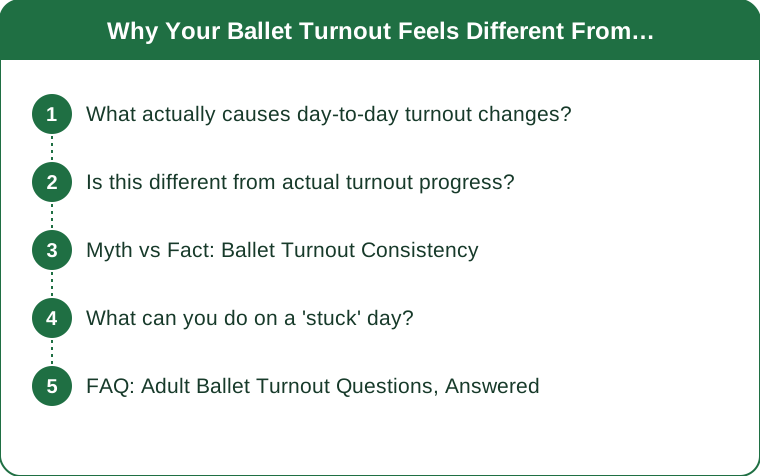
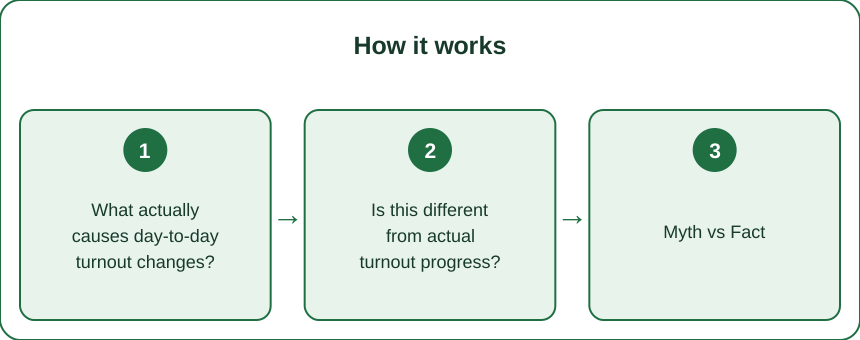
What actually causes day-to-day turnout changes?
Hip joint temperature is the biggest factor — cold hips (from a cold studio, or coming straight from sitting in a car) have measurably less range until properly warmed. Sleep quality affects tissue elasticity and pain tolerance, both of which influence how far a stretch feels safe to go.
Hours of prior sitting also matters — hip flexors shortened from a desk day take longer to release into full range.
Is this different from actual turnout progress?
Yes — daily fluctuation is a range of maybe 5-10 degrees, while genuine flexibility progress from consistent training happens over months, not day to day. If you’re frustrated by a ‘bad’ class, it’s almost always fluctuation, not lost progress.
Track turnout weekly or monthly instead of class to class if you want an accurate read on actual improvement.
Myth vs Fact: Ballet Turnout Consistency
Myth: Turnout should feel the same every single class if you’re training correctly. Fact: Daily variation from warmth, sleep, and prior activity is completely normal, even for professional dancers.
Myth: A ‘bad’ turnout day means you’re losing flexibility. Fact: Short-term fluctuation and long-term flexibility change are different things measured on completely different timescales.
Myth: You should push through a stuck day to ‘prove’ your range. Fact: Forcing turnout on a cold or tired day raises injury risk without any real training benefit.
What can you do on a ‘stuck’ day?
Extend the warm-up, especially hip circles and gentle external rotation holds, rather than jumping straight to barre work. Accept a slightly smaller range that day rather than forcing it — the joint will typically be back to normal within a class or two.
A longer warm-up on cold or low-sleep days does more for that day’s range than any single stretch.
FAQ: Adult Ballet Turnout Questions, Answered
How much can turnout normally vary day to day?
A range of roughly 5-10 degrees is common and not a cause for concern — it reflects daily condition, not lost training.
Does sitting all day before class really affect turnout that much?
Yes — prolonged sitting shortens hip flexors and can measurably reduce available external rotation until it’s warmed and released.
Should I track my turnout progress class by class?
No — weekly or monthly tracking gives a much more accurate picture, since day-to-day numbers are dominated by temporary factors, not real change.
TL;DR:
- Turnout fluctuates 5-10 degrees daily from hip warmth, sleep, and prior sitting
- This is separate from real flexibility progress, which only shows over months
- Extend warm-up on cold or tired days instead of forcing range
- Track progress weekly or monthly, not class to class
A stuck turnout day isn’t a setback — it’s just your hips telling you what kind of day it’s been.
Keep Reading
This article is for general informational and styling purposes only. Fit, sizing, and product availability may vary.