Why Your Turnout Looks Worse in the Mirror Than It Feels in Your Hips
Quick Answer: Turnout that feels strong in your hips but looks small in the mirror usually means you’re rotating from the knees and ankles rather than the hip socket — the mirror is showing you the truth your body hasn’t caught up to yet.
You work the barre exercises, you feel your hips engage, and then you catch your reflection and your feet look barely turned out at all. That gap between feeling and seeing is one of the most common frustrations in adult ballet, and it’s not really about flexibility.
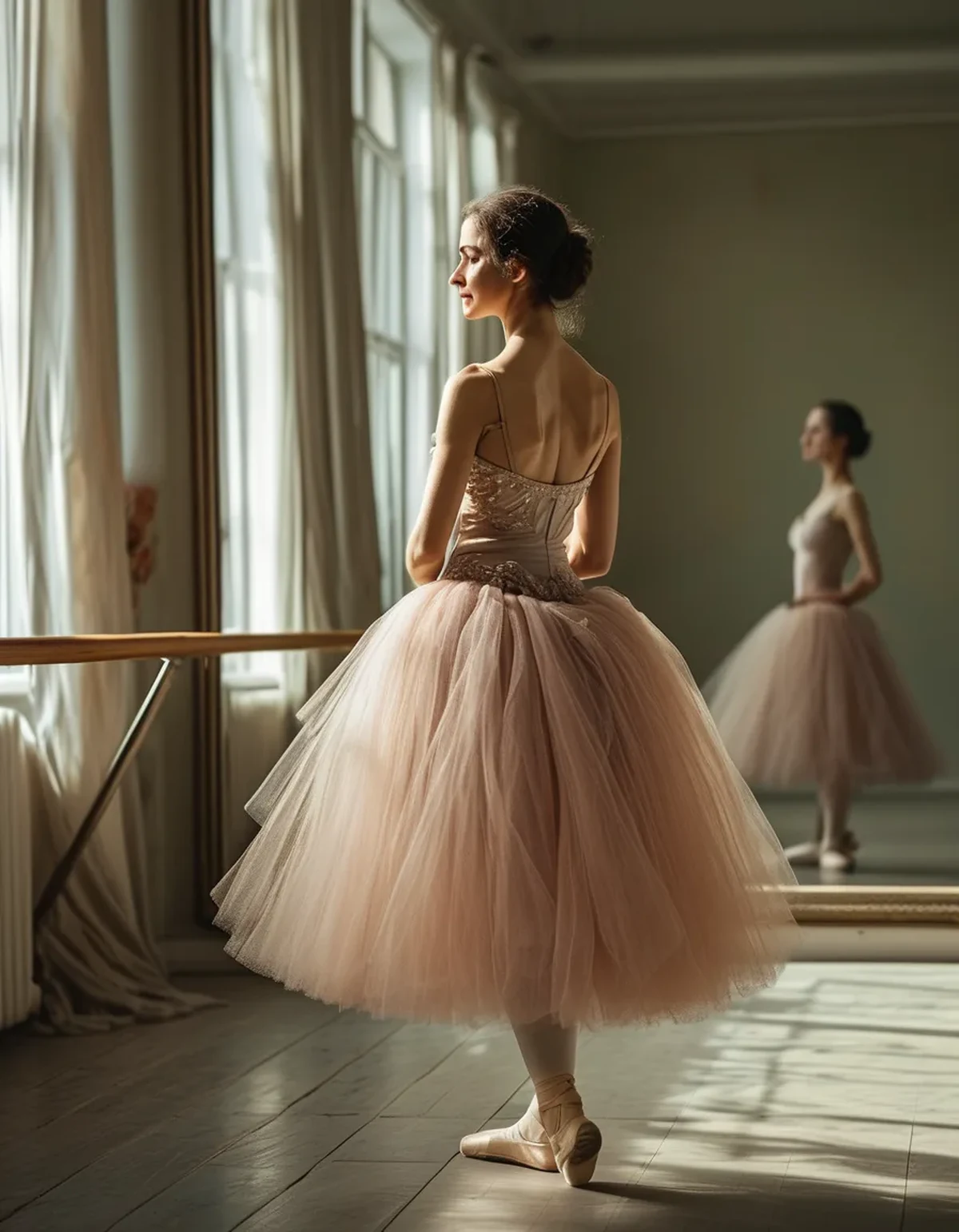
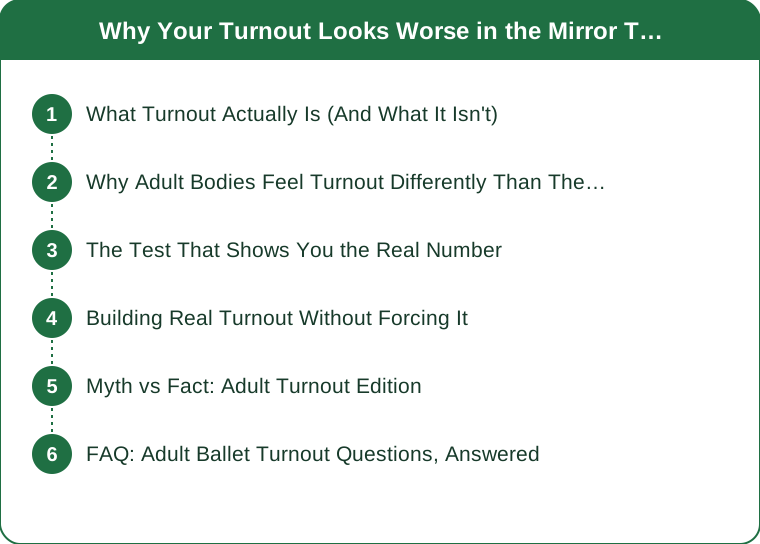
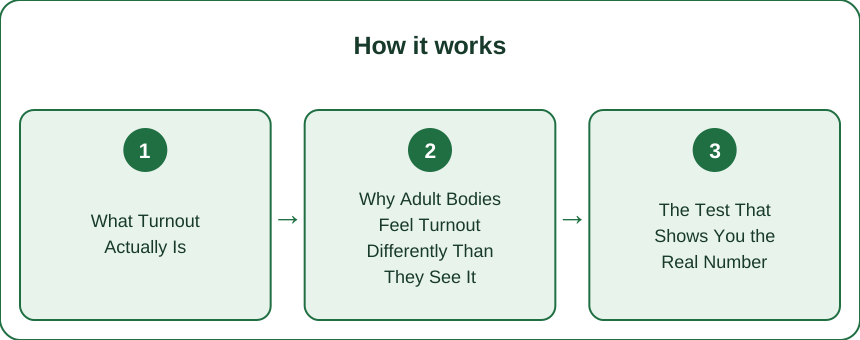
What Turnout Actually Is (And What It Isn’t)
True turnout is external rotation from the hip joint, not a foot position you can force by twisting your ankles. When dancers ‘screw’ their knees or force their feet apart without hip rotation, the mirror shows the same visual gap that the hips would show if they were doing the rotation correctly — except now the knees are also under strain.
Why Adult Bodies Feel Turnout Differently Than They See It
Adults who started ballet later often have proprioception (body-position sense) that developed around other movement patterns — walking, running, sitting at a desk — where hip rotation almost never happens. Your nervous system genuinely believes you’re more rotated than you are, because it has no reference point from years of turned-out training to calibrate against.
The Test That Shows You the Real Number
Sit on the floor with legs extended, then let your feet fall open naturally without forcing anything — this is your passive turnout, the honest starting point your hip sockets allow. Compare that resting angle to what you attempt at the barre; if the barre position is significantly wider than your seated resting angle, you’re forcing rotation from somewhere other than the hip, usually the knee or ankle.
Building Real Turnout Without Forcing It
Deep hip external rotator strength — not stretching — is what closes the gap over time. Clamshells, seated hip rotations with a resistance band, and slow frog-stretch holds (not bounced) build the muscular control to access more of your available range safely.
Give this 8-12 weeks of consistent work, 3 times a week, before expecting a visible mirror change. Turnout gains are slow because you’re training small, deep muscles that don’t respond to quick fixes.
Myth vs Fact: Adult Turnout Edition
Myth: Turnout is mostly about flexibility. Fact: it’s primarily about hip socket shape and rotator strength — some naturally shallow hip sockets have a lower ceiling regardless of stretching.
Myth: If it doesn’t look turned out, you’re doing it wrong. Fact: working within your honest passive turnout range, even if it looks modest, protects your knees far better than forcing a bigger-looking position.
FAQ: Adult Ballet Turnout Questions, Answered
Can adults improve turnout after starting ballet late?
Yes, meaningfully — most gains come from rotator strength and control rather than hip socket changes, and those respond to training at any age.
Is knee pain from turnout normal?
Mild fatigue is normal; sharp or twisting knee pain usually means you’re forcing rotation past your hip’s available range and should be adjusted immediately.
How do teachers spot forced turnout?
They watch the knee direction relative to the foot — if the knee doesn’t track over the same line as the turned-out foot, the rotation isn’t coming from the hip.
TL;DR:
- Mirror turnout gaps usually mean rotation is coming from knees/ankles, not hips
- Test your honest passive turnout seated on the floor as a baseline
- Build rotator strength (clamshells, band rotations) over 8-12 weeks
- Working within your real range protects knees better than forcing a bigger look
The mirror isn’t lying to you — it’s showing exactly how much hip rotation is actually happening. Trust that feedback over how open your hips feel, and train the muscles that close the real gap.
Keep Reading
This article is for general informational and styling purposes only. Fit, sizing, and product availability may vary.