Ballet Posture Off the Barre: Standing Taller by Thursday
Quick Answer: Ballet posture — imagining a string pulling up gently from the crown of your head — is a habit you can use anywhere, not just at the barre. Practicing it a few times a day at your desk, in line, or waiting for an elevator retrains your body’s default alignment, and most people notice a visible difference within about a week of consistent reps.
You know that moment mid-class when the teacher says “grow taller” and suddenly, somehow, you have a neck? That feeling doesn’t have to stay in the studio. It’s exportable — a posture reset you can carry into your desk chair, your commute, and the grocery line, and it costs nothing but a little attention.

What Is the “String Trick” Ballet Teachers Use?
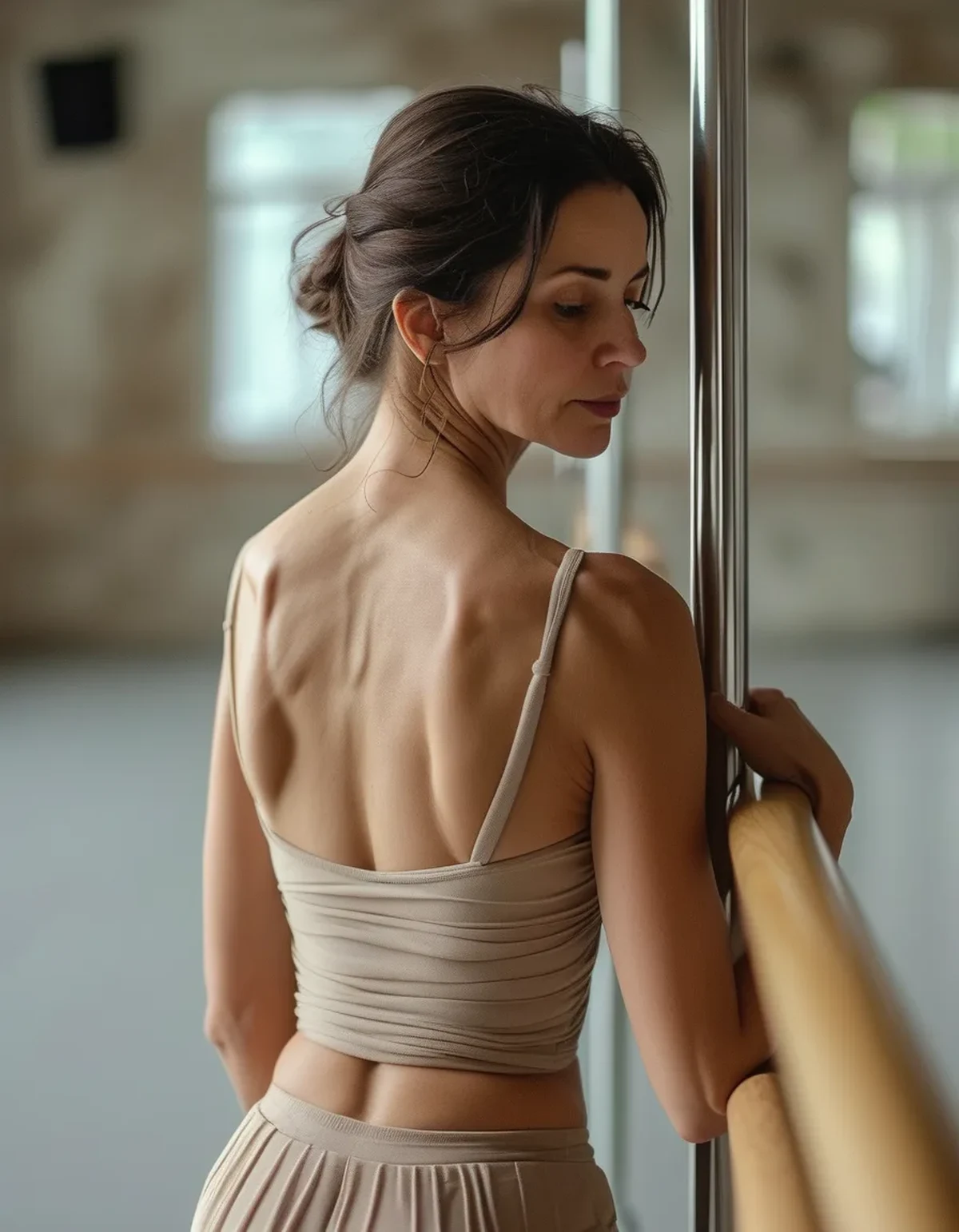
It’s the whole secret behind ballet posture, and it’s disarmingly simple: imagine a string attached to the crown of your head, gently pulling you upward. Your ribs settle down instead of jutting forward, your shoulders drop away from your ears, and — like magic — your neck reappears. You can deploy this trick anywhere: elevators, meetings, family photos, the checkout line. It takes about three seconds and nobody around you will know you’re doing it.
How Can You Use Ballet Posture at Your Desk?
Sitting is basically the opposite of ballet posture, so it takes a little active resistance. A few adjustments make a real difference:
- Sit toward the front edge of your chair, rather than sinking into the backrest.
- Keep both feet flat on the floor, hip-width apart, like you’re rooting down before a plié.
- Engage the string trick — crown lifting, ribs settling, shoulders relaxing down and back.
- Check in hourly. Set a recurring reminder if you need to; posture habits fade fast when you’re focused on a screen.
Do this consistently and you’re basically sneaking in barre-adjacent core work while you answer emails nobody thanked you for.
Can You Practice Ballet Technique While Waiting in Line?
Absolutely — waiting is secret training time. A slow, controlled relevé (rising onto the balls of your feet and lowering back down) while the card machine thinks about your transaction works your calves, ankles, and balance all at once. Do five to eight slow reps and you’ve sneaked in a mini ankle workout. The person behind you might think you’re just impatient. You, however, are quietly in rehearsal.
Why Does Practicing Posture Off the Barre Actually Work?
Posture is fundamentally a habit loop — a cue, a routine, and a reward — and ballet class already builds that wiring for you through repetition. Every time you consciously use the string trick outside of class, you’re reinforcing the same neural pathway your teacher activates when they say “grow taller.” Run that loop enough times during the day and standing tall stops being an effort; it just becomes how you stand. Give it about a week of a few reps a day, and don’t be surprised if people start asking whether you got taller. You didn’t. You just stopped slouching.
5 Mistakes Everyone Makes With Ballet Posture
- Only practicing it in class. The whole point is that it should live outside the studio too — that’s where the habit actually forms.
- Overcorrecting into a stiff, arched back. Ballet posture is a gentle lift, not a rigid military stance — you should still be able to breathe easily.
- Forgetting the feet. Posture starts from the ground up; flat, grounded feet make the lift up top far more stable.
- Holding tension in the shoulders. Shoulders should drop down and back, not creep up toward your ears — that’s neck tension in disguise.
- Giving up after a day or two. Like any habit, it takes repeated reps — closer to a week of small check-ins — before it starts to feel automatic.
Mini FAQ
How long does it take for ballet posture to become a habit?
Most people notice it starting to feel automatic after about a week of practicing the string trick a few times a day. Consistency matters more than duration — a few seconds, several times daily, beats one long session.
Does ballet posture help with back or neck pain?
Better alignment can ease the kind of tension that builds from slouching at a desk, since it takes pressure off the neck and lower back. If pain is persistent or severe, it’s worth checking in with a doctor or physical therapist rather than relying on posture alone.
Can you do the grocery-line relevé in regular shoes?
Yes — flat shoes or low heels work fine; just keep the movement slow and controlled rather than bouncy. If you’re in unstable footwear, a smaller range of motion is safer than skipping it altogether.
TL;DR
- The string trick — imagining a string pulling up from the crown of your head — is ballet’s core posture cue, and it works anywhere.
- Use it at your desk: feet flat, seated at the front edge of the chair, checked in on hourly.
- Turn waiting time into training time with 5-8 slow relevés in line.
- Posture change is a habit loop — expect noticeable results in about a week of small, repeated reps.
- Avoid overcorrecting into a stiff back or tense shoulders; the lift should feel gentle, not forced.
Keep Reading
This article is for general informational and styling purposes only. Fit, sizing, and product availability may vary.