Choosing the Right Adult Ballet Level When Every Studio Labels Classes Differently
Walking into an adult ballet class labeled ‘beginner’ can mean two completely different experiences depending on the studio — one room walking through first position slowly, another already moving through a full center combination. The label alone tells you almost nothing. Here is why studio levels don’t translate, the signs you’ve landed in the wrong one, and how to actually find your fit.

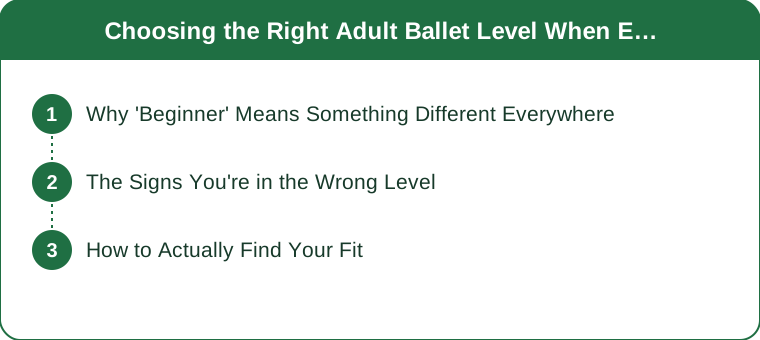
Why ‘Beginner’ Means Something Different Everywhere
The labeling problem: the no-standardized-level-system (the ballet training having no universal grading system the way some sports certifications do, so studios invent their own — the every-studio-is-its-own-scale), the the-studio-culture-shapes-the-floor (the a studio built around former dancers returning to class labeling things ‘beginner’ relative to that population, not true first-timers — the beginner-relative-to-who), the the-teacher-discretion-varies-widely (the one teacher slowing everything down for true beginners while another assumes prior exposure regardless of the label — the the-label-doesn’t-bind-the-teacher), the the-marketing-incentive (the some studios softening level names to sound more welcoming, even when the actual pace is brisk — the friendly-label-isn’t-always-accurate), the the-mixed-level-classes-are-common (the many adult programs blending true beginners with years-in dancers in the same room by necessity of small class sizes — the label-may-not-even-reflect-a-single-level), and the reframe (the level label as a rough starting guess at best, never a guarantee of what the room will actually feel like).

The Signs You’re in the Wrong Level
What to notice in the first few classes: the you-cant-follow-combinations-at-all (the entire center combinations passing by without any reference point, versus just needing a bit more repetition — the total-loss-vs-normal-lag), the the-terminology-is-a-constant-wall (the every single French term from the ballet-terms-cheat-sheet logic being unfamiliar rather than occasionally needing a reminder — the vocabulary-gap-signals-mismatch), the the-physical-demand-feels-injurious-not-challenging (the sharp strain rather than productive effort, a sign the pace or difficulty is genuinely too advanced for your current conditioning — the challenge-should-tire-not-hurt), the the-youre-bored-not-refining (the already comfortably executing everything with room to spare, meaning the level is too easy rather than appropriately building — the boredom-signals-under-leveled), the the-anxiety-outweighs-enjoyment-every-class (the consistently dreading class rather than the normal first-few-weeks nerves — the persistent-dread-is-data), and the frame (the wrong-level signs as either total disorientation or complete lack of challenge — both are information, not a verdict on your ability).
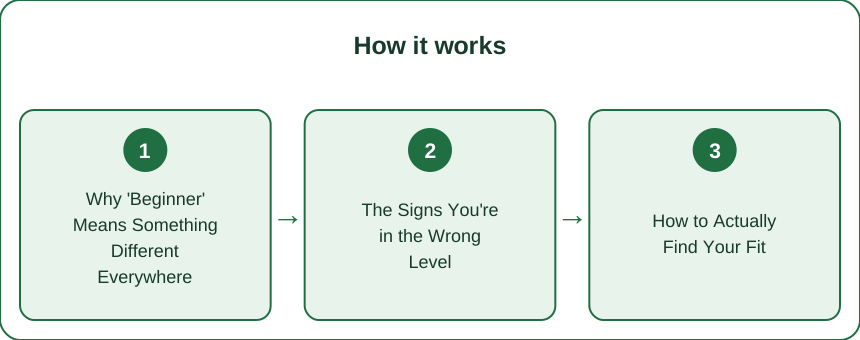
How to Actually Find Your Fit
The practical approach: the call-and-ask-specific-questions (the asking directly whether the class assumes any prior ballet training, not just trusting the level name — the ask-past-the-label), the the-drop-in-before-committing (the trying a single drop-in class before buying a full package whenever the studio allows it — the test-before-you-buy-in), the the-watch-a-class-if-allowed (the observing from the side before joining, many studios permitting this for adult programs — the see-it-before-youre-in-it), the the-talk-to-the-teacher-directly (the a two-minute conversation before class about your background giving the teacher context to guide you appropriately — the give-context-get-better-guidance), the the-give-it-three-classes-before-switching (the one awkward class not being enough data, since first-class nerves affect everyone — the three-classes-is-the-real-test), and the frame (the fit-finding process as asking specific questions, trying before committing, and giving a level three honest classes before deciding it’s wrong — the right level exists at most studios, it just rarely matches the label on the schedule board).
Adult ballet level labels vary wildly between studios because there’s no standardized grading system, and what one studio calls beginner might assume more prior exposure than another studio’s intermediate class. The real signs of a mismatch are total disorientation during combinations or vocabulary versus a normal first-weeks lag, sharp strain versus productive challenge, and persistent dread versus ordinary first-class nerves. The fix is asking specific questions before committing — whether the class assumes prior training, whether a drop-in or observation is possible — and giving any level three honest classes before deciding it’s wrong, since first-class nerves affect nearly everyone. The right level exists at almost every studio; it just rarely matches the word printed on the schedule.
Keep Reading
This article is for general informational and styling purposes only. Fit, sizing, and product availability may vary.