Ballet Flexibility for Adult Bodies: Realistic Splits and Honest Extensions
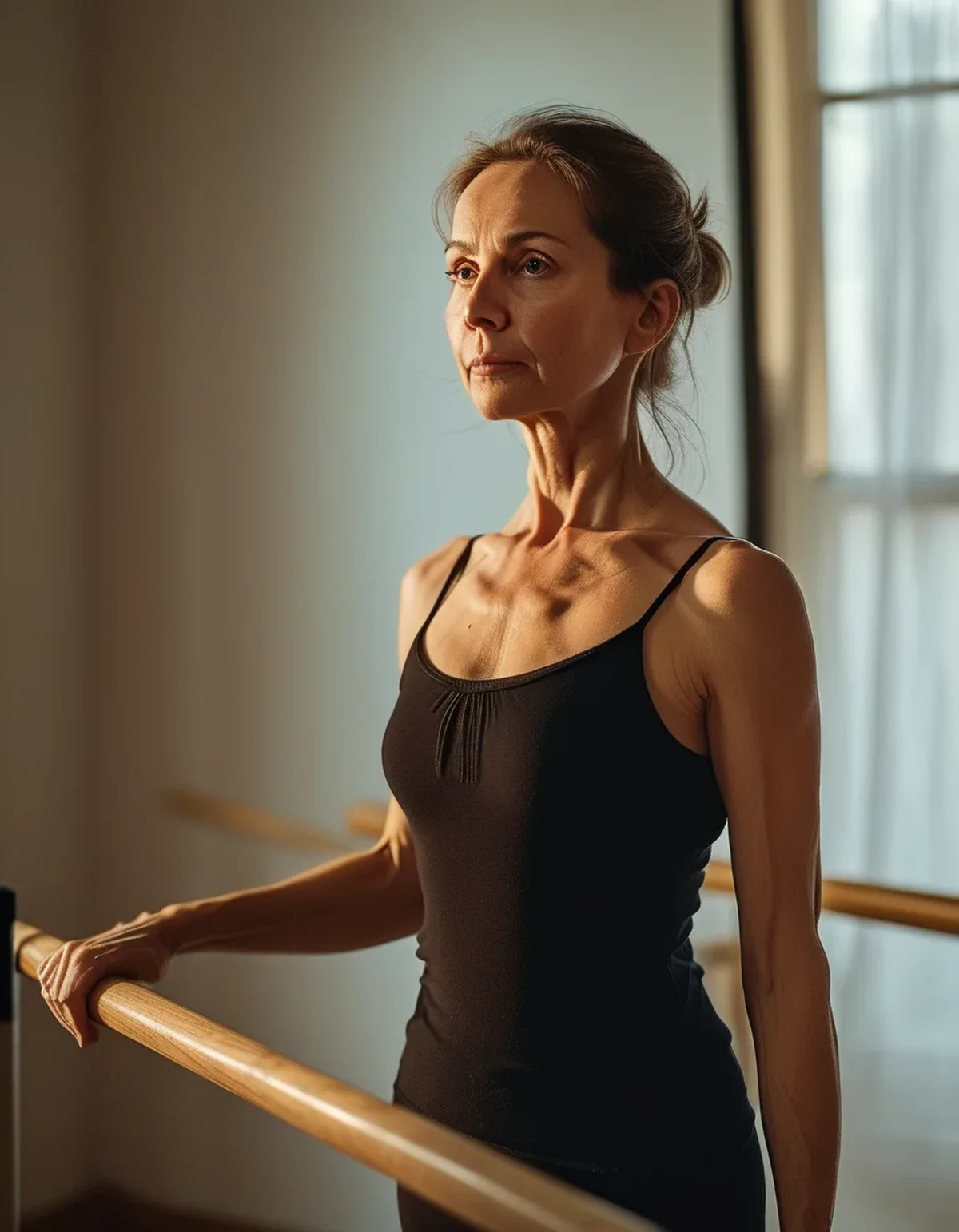
Adult ballet students all ask the same quiet question: can these hips still learn splits and high extensions, or did that ship sail at twelve? The honest answer is more encouraging than the fear and more patient than the Instagram promises. The adult flexibility guide, no fantasy included.
What Adult Bodies Can Do
The realistic ceiling: adult connective tissue adapts slower than a child’s but it ABSOLUTELY adapts — most consistent adults gain dramatic range over 1-2 years (touching toes to flat palms, respectable arabesques, and yes, often full splits eventually), while the professional-level 180+ extensions bank on childhood-molded hip sockets that adults borrow against, not own. Translation: the beautiful, capable version is available; the Instagram contortion tier is optional genetics.
The Method That Works
The evidence-backed approach: consistency over intensity (five 10-minute sessions beat one heroic hour — tissue remodels on frequency), strength WITH stretch (the loaded, active flexibility that ballet actually uses — the leg you can HOLD at 90 degrees beats the one you can only kick there; lifts and holds train it), warm before deep (post-class stretching goes twice as far as cold-morning yanking), and the edge-not-injury rule (discomfort is the work; sharp pain is the exit).

The Ballet-Specific Plan
The routine: the hip-flexor kneeling stretch (desk-life’s un-doing — the single highest-value adult stretch; tight hip flexors fake tight hamstrings and cap arabesques), the hamstring rail stretch (leg on the barre, spine long — bend the knee to find the honest hamstring), the frog and butterfly family (turnout lives in the hips, not the feet — forcing turnout at the knee is the classic adult injury; rotate from the top), calf and ankle work (pointe-adjacent range needs supple ankles), and the finishing spinal twists.
The Patience Math
The timeline honesty: visible progress at 6-8 weeks, felt-in-class progress at 3-6 months, the surprising-yourself tier at a year-plus — flexibility compounds like savings, boring deposits and dramatic balances. The tracking trick: monthly photos of the same three stretches (the day-to-day is invisible; the month-to-month is astonishing), and the plateau protocol (plateaus are consolidation, not failure — strength work through the current range unlocks the next centimeters). The twelve-year-old had time; you have method. Method wins more often than anyone expects.
Frequency over heroics, strength with stretch, rotate from the hips, photograph monthly. Adult flexibility is a savings account — and the splits are a balance most patient adults actually reach.
Keep Reading
This article is for general informational and styling purposes only. Fit, sizing, and product availability may vary.