The Adult Ballet Home Practice: Building Real Skill Between Classes
The adult ballet dancer who only moves in class progresses at class-speed — while the one who drills ten minutes at home between lessons compounds. The home-practice guide: the setup, the safe solo sequence and the honest line between what to drill alone and what to save for the teacher’s eye.
The Home-Barre Setup
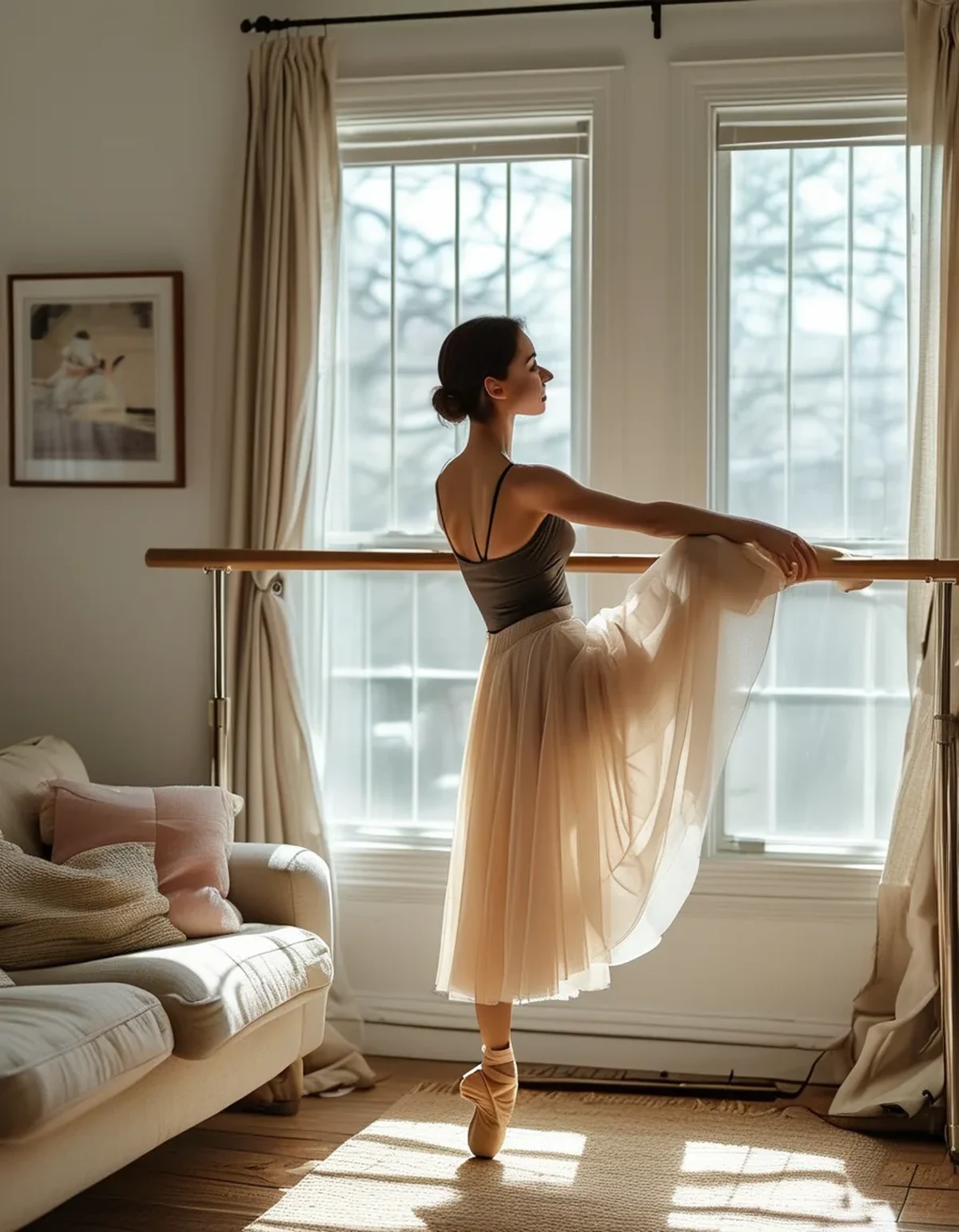
The practice space, improvised: the barre substitute (the sturdy counter, the chair back, the windowsill at hip-ish height — the support that doesn’t wobble; the countertop as most dancers’ first barre), the floor reality (the space to tendu without hitting furniture — the small clearing that suffices; the slippery-sock caution and the grippy-versus-smooth surface note for turns), the mirror question (the phone-on-a-stand as the feedback tool — the recorded combination revealing what the felt version hides; the alignment check the beginners chapter emphasized), and the minimal-kit truth (the practice needs almost nothing — the barre, the space and the ten minutes; the adult ballet’s low equipment bar as its accessibility).
The Safe Solo Sequence
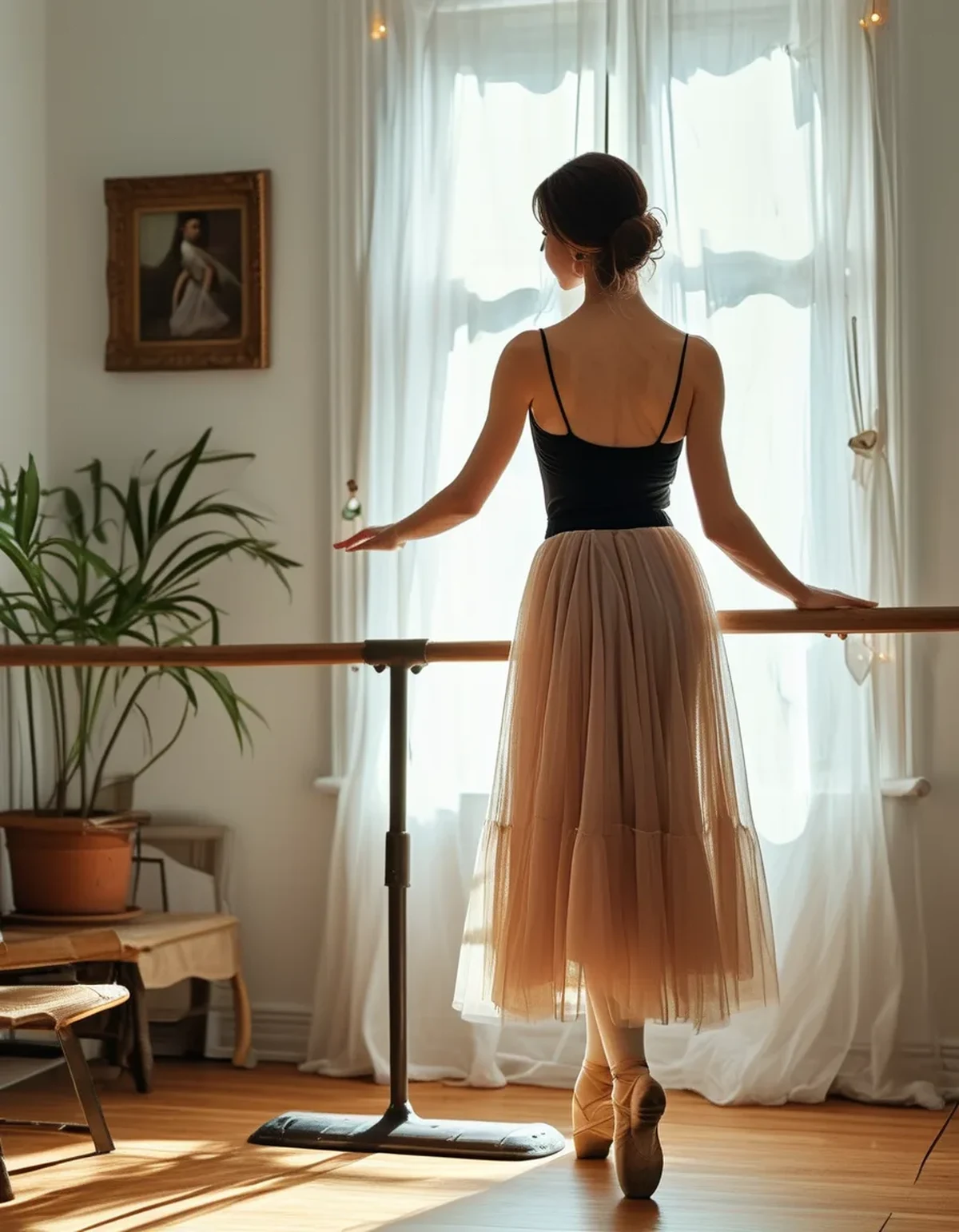
What to drill without a teacher: the barre fundamentals (the pliés, tendus and dégagés that reward repetition — the foundation work that’s low-risk and high-return; the muscle-memory that class-only can’t build), the flexibility-and-strength work (the stretches from the flexibility chapter and the core-and-turnout drills — the conditioning that makes class-day better), the port-de-bras and posture (the arms, the carriage and the everyday-posture from the posture chapter — the upper-body artistry rehearsed in the mirror), the balance holds (the relevé and passé balances at the barre — the stability trained safely with support), and the review-the-combination habit (the class material walked through slowly — the choreography absorbed by repetition; the notes-after-class practice).
The Save-For-Class Line
What NOT to solo: the jumps-and-big-allegro (the landing mechanics that want a teacher’s eye and a proper floor — the injury risk of unsupervised jumping; the save-it-for-the-studio rule), the pointe work (the emphatic never-alone tier — the pointe readiness and technique that demand professional guidance per the realistic-pointe honesty), the pushing-flexibility-hard (the aggressive stretching that hurts more than helps — the gentle-only solo rule), the new-and-unfamiliar (the technique you haven’t been taught yet — the YouTube-taught bad habits that class then has to fix; the learn-it-right-first principle), and the frame (the home practice as REINFORCEMENT of taught material — the drilling that deepens what class introduced; the compounding that turns the once-weekly dancer into the visibly-improving one). Barre basics daily, jumps in the studio: the practice, compounded safely.
Drill the barre basics, conditioning and posture at a countertop between classes — but save jumps, pointe and brand-new material for the teacher’s eye. Home practice reinforces; it doesn’t replace instruction.
Keep Reading
This article is for general informational and styling purposes only. Fit, sizing, and product availability may vary.